Structural steel installation is one of the most critical phases of any construction project. Whether it’s a commercial building, industrial facility, warehouse, bridge, or manufacturing plant, proper installation ensures the structural integrity, longevity, and safety of the finished project.
Even the highest-quality fabricated steel components can fail to perform as intended if they are not installed correctly. This is why quality control and safety management play a vital role throughout the installation process.
In this guide, we’ll explore why quality and safety matter in structural steel installation, the key installation stages, common risks, and the best practices that help ensure successful project completion.
Why Quality Matters in Structural Steel Installation
Structural steel forms the backbone of many modern buildings. Every beam, column, brace, and connection must be positioned precisely according to engineering drawings.
Maintaining high-quality installation standards provides several important benefits:
- Ensures structural stability
- Reduces construction errors
- Improves long-term durability
- Prevents costly rework
- Supports compliance with engineering specifications
- Increases project efficiency
- Enhances overall building performance
Proper installation also ensures that fabricated components fit together as intended, allowing the structure to safely carry design loads.
The Importance of Safety During Steel Installation
Steel installation involves heavy lifting, working at height, welding, bolting, and operating large construction equipment. These activities present significant safety challenges if not properly managed.
A strong safety culture protects:
- Installation crews
- Site supervisors
- Equipment operators
- Other contractors on site
- Project owners
Safe installation practices also minimise delays, reduce workplace incidents, and improve productivity throughout the project.
Key Stages of Structural Steel Installation
Professional installation follows a carefully planned sequence to ensure both quality and safety.
1. Site Preparation
Before steel components arrive, the construction site must be properly prepared.
This includes:
- Foundation inspection
- Anchor bolt verification
- Site access planning
- Crane positioning
- Material storage areas
- Safety barriers
- Equipment inspection
Proper preparation helps avoid installation delays and reduces the risk of accidents.
2. Receiving and Inspecting Steel Components
Each structural steel component should be inspected before installation.
Inspection typically includes:
- Checking dimensions
- Verifying identification marks
- Looking for transportation damage
- Confirming protective coatings
- Inspecting weld quality
- Reviewing delivery documentation
Any damaged or incorrect components should be identified before lifting begins.
3. Lifting and Positioning
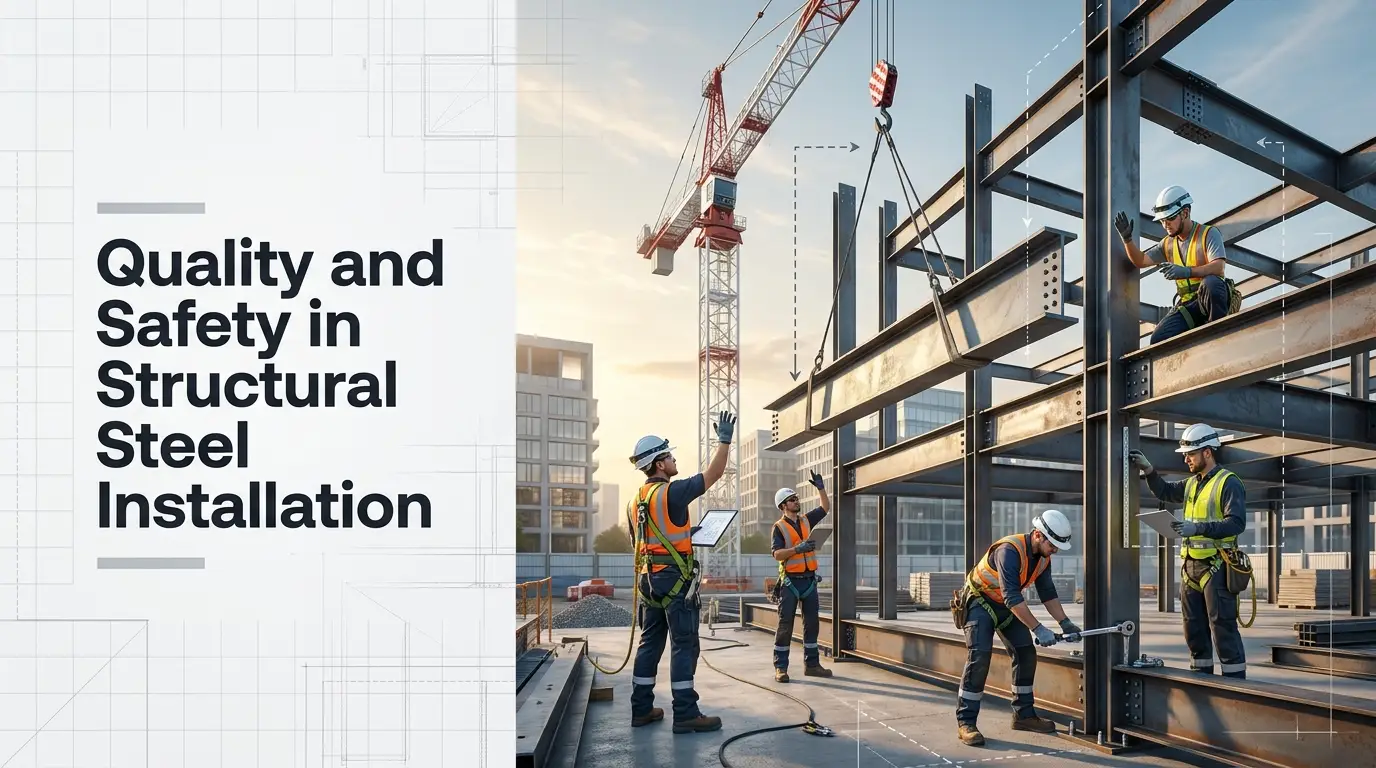
Steel members are lifted into position using cranes and specialised lifting equipment.
Professional lifting procedures include:
- Approved lifting plans
- Certified lifting equipment
- Qualified crane operators
- Proper rigging techniques
- Clear communication between crews
- Controlled lifting zones
Correct lifting reduces the risk of structural damage and workplace accidents.
4. Temporary Bracing
Temporary supports are often required while the structural frame is being assembled.
Bracing helps maintain alignment until permanent connections are completed.
Removing temporary supports too early can compromise structural stability.
5. Permanent Connections
Steel members are secured using bolts or welding, depending on the project requirements.
Connection quality is essential because these joints transfer loads throughout the structure.
Installers must follow approved engineering drawings and specified torque or welding procedures.
Quality Control During Installation
Quality control is an ongoing process rather than a single inspection.
Professional installation teams continuously verify that every component meets project requirements.
Typical quality checks include:
- Beam alignment
- Column plumbness
- Bolt torque verification
- Weld inspection
- Connection accuracy
- Dimensional measurements
- Structural tolerances
- Surface coating condition
Regular inspections reduce the likelihood of errors becoming larger structural problems later.
Common Safety Risks
Structural steel installation presents several hazards that require careful planning.
Common risks include:
- Falls from height
- Crane-related incidents
- Falling materials
- Improper lifting
- Equipment failure
- Welding hazards
- Electrical risks
- Slips and trips
- Weather-related hazards
Recognising these risks allows contractors to implement effective safety measures before work begins.
Best Practices for Safe Installation
Professional contractors follow industry-recognised procedures to maintain a safe work environment.
Key safety practices include:
- Conducting daily safety briefings
- Wearing appropriate personal protective equipment (PPE)
- Inspecting lifting equipment regularly
- Using certified cranes and rigging systems
- Following engineered lifting plans
- Maintaining clear communication
- Restricting access to lifting zones
- Monitoring weather conditions
- Ensuring all workers receive proper training
A proactive approach to safety helps prevent incidents and keeps projects on schedule.
The Role of Skilled Installation Teams
Structural steel installation requires experienced professionals who understand engineering drawings, installation sequences, and safety regulations.
A qualified team typically includes:
- Site supervisors
- Structural engineers
- Certified welders
- Steel erectors
- Crane operators
- Riggers
- Quality inspectors
- Safety officers
Working with trained professionals improves both installation quality and project efficiency.
Modern Technology Improves Quality and Safety
Today’s construction industry uses advanced technologies to improve installation accuracy.
Common technologies include:
- 3D Building Information Modelling (BIM)
- Digital surveying equipment
- Laser alignment systems
- Drone site inspections
- Electronic torque monitoring
- Digital quality documentation
These technologies reduce errors, improve communication, and help projects meet demanding construction schedules.
Compliance with Industry Standards
Every structural steel installation project should comply with relevant engineering standards, building regulations, and safety requirements.
Following recognised standards ensures:
- Consistent workmanship
- Reliable structural performance
- Improved inspection outcomes
- Better project documentation
- Increased client confidence
Compliance also helps minimise legal and financial risks throughout the construction process.
Benefits of Professional Structural Steel Installation
Choosing an experienced installation contractor offers numerous advantages:
- Greater installation accuracy
- Enhanced worker safety
- Faster project completion
- Reduced rework
- Higher construction quality
- Improved structural performance
- Better coordination with other trades
- Long-term durability
- Compliance with engineering specifications
Professional installation protects both the investment and the long-term performance of the structure.
Quality and safety are the foundation of successful structural steel installation. Careful planning, skilled workmanship, continuous quality control, and strict safety procedures ensure that every structural component performs as designed.
From the first beam placement to the final inspection, every stage of installation contributes to the strength, reliability, and longevity of the finished structure.
Partnering with an experienced structural steel installation company ensures your project is completed efficiently, safely, and to the highest industry standards.